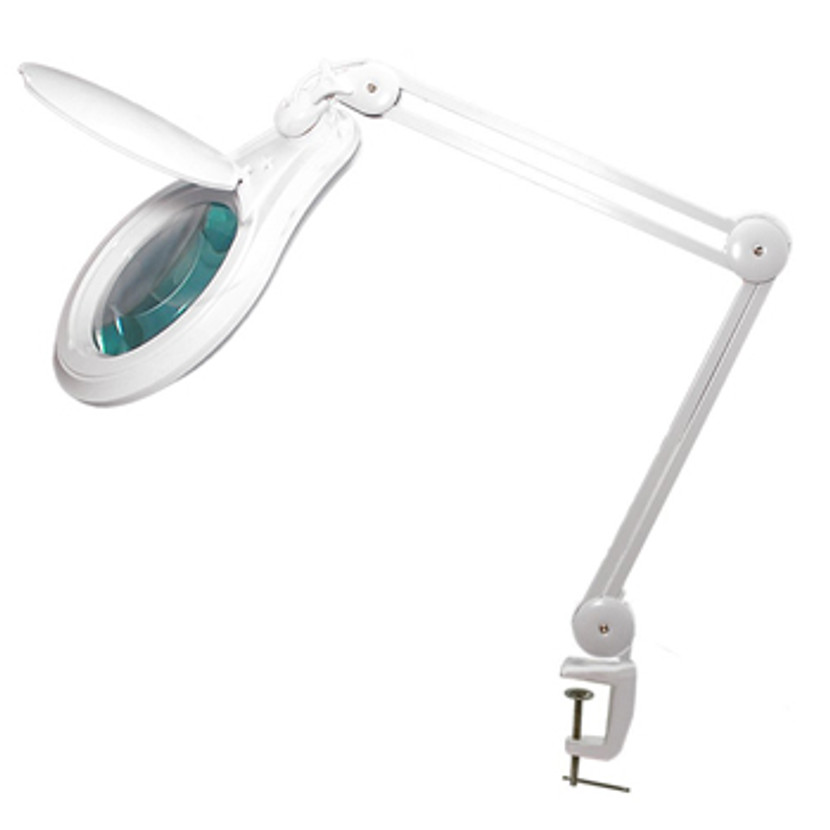
LED vs Fluorescent Magnifying Lamps: What to Look For When Shopping
LED vs Fluorescent Magnifying Lamps: What to Look For When Choosing One
If you are shopping for a magnifying lamp for electronics repair, soldering, esthetics, crafting, inspection, or detailed close-up work, one of the most important factors to understand is the lighting technology.
Modern magnifying lamps use LED (often SMD LED) lighting, while older models typically use fluorescent or CFL bulbs. The differences between these lighting types directly affect brightness, comfort, energy use, and long-term usability.
This guide explains the key features to compare so you can choose the right magnifying lamp for your workflow.
1. Lighting Technology & Lens Design (LED vs Fluorescent)
The biggest difference between magnifying lamps is the lighting system.
Fluorescent Magnifying Lamps
Older magnifying lamps commonly use fluorescent tubes or CFL bulbs. These systems:
- require larger lamp housings
- produce more heat
- offer limited brightness consistency over time
- take up more internal space in the lamp head
They were widely used in older inspection and beauty setups but are now being replaced by LED systems.
LED (SMD LED) Magnifying Lamps
Modern magnifying lamps use SMD LED technology (Surface Mounted Device LEDs), which places multiple small LED chips directly onto a circuit board.
This design provides:
- brighter, more uniform illumination
- reduced shadows in close-up work
- lower heat output for comfort
- significantly longer lifespan (often up to ~50,000 hours)
- more compact lamp heads that allow larger lenses
Why this matters
Because LED systems take up less space, manufacturers can design:
- larger magnification lenses (6–7 inch options)
- wider viewing areas
- better edge-to-edge clarity
This is especially important for precision work like electronics inspection or esthetic procedures.
2. Adjustable Brightness for Different Tasks
Many fluorescent lamps offer only a single fixed brightness level, which limits flexibility.
Modern LED magnifying lamps often include multiple brightness settings, allowing you to adjust light output based on your task.
This improves performance in different environments:
- low brightness → facial treatments or comfort viewing
- medium brightness → general crafting and inspection
- high brightness → electronics soldering and fine detail work
Why this matters
Adjustable lighting helps maintain:
- visual accuracy
- reduced eye strain
- better control in detail-sensitive tasks
3. Lens Size, Field of View & Working Comfort
The lighting system directly affects lens design.
Because LED systems are compact, they allow for:
- larger lens diameters (commonly 5", 6", or 7")
- wider field of view
- improved edge-to-edge clarity
Practical impact:
- larger lenses reduce the need to reposition materials constantly
- wider viewing areas improve workflow efficiency
- clearer edges improve precision during inspection or fine work
Common lens size guide:
- 5 inch → close precision work
- 6 inch → balanced general use
- 7 inch → wide-area inspection and crafting
4. Lighting Comfort: Heat, Color, and Eye Strain
Lighting quality affects long working sessions more than most people realize.
Fluorescent lighting:
- produces more heat near the work area
- may shift color tone over time
- can feel harsh during extended use
LED (SMD LED) lighting:
- cool, daylight-balanced illumination
- minimal heat output
- stable brightness over time
Why this matters
Cool, even lighting helps improve:
- comfort during long sessions
- visual clarity in fine-detail work
- consistency in color-sensitive tasks (beauty, inspection, crafting)
5. Mechanical Design & Stability
Modern magnifying lamps are designed for precision positioning and hands-free use.
Common improvements include:
- reinforced metal arms for stability
- smoother articulation joints
- improved balance to reduce wobble
- stable positioning during fine work
Why this matters
Stable positioning is critical for:
- soldering and PCB inspection
- esthetic procedures
- detailed crafting or painting
- medical or laboratory-style work
A stable lamp helps maintain accuracy without constant readjustment.
6. Mounting Options: Clamp vs Floor Stand
Our magnifying lamps are available with multiple mounting options:
Clamp Mount
- attaches directly to a desk or workstation
- saves space
- ideal for permanent setups
Rolling Floor Stand
- mobile positioning across a workspace
- flexible placement
- ideal for multi-use environments
Desk mount & wall mount options are also available.
7. Electrical Safety & Long-Term Reliability
When selecting a magnifying lamp, long-term reliability matters as much as brightness.
Our modern LED magnifying lamps are designed for durability and:
- high-quality internal wiring
- stable power components
- durable housing materials
Why this matters
Reliable construction ensures:
- consistent lighting performance over time
- reduced maintenance issues
- safer long-term use in professional environments
8. ESD-Safe Options for Electronics Work
For electronics repair, PCB work, or precision engineering, ESD-safe (anti-static) magnifying lamps are recommended.
These models help reduce static buildup and are commonly used in:
- electronics assembly
- circuit board repair
- precision manufacturing environments
9. How to Choose the Right Magnifying Lamp
If you're comparing options, here’s a simple guide:
Choose LED SMD magnifying lamps for:
- bright, even lighting
- low heat output
- long working sessions
- modern lens designs
Match your use case:
- Electronics / soldering → LED + ESD-safe option
- Esthetics / salon work → LED with adjustable brightness
- Crafting / hobbies → LED with larger lens (6–7 inch)
- General inspection → standard LED clamp lamp
Final Thoughts
Magnifying lamps are essential tools across electronics, esthetics, crafting, and inspection work. The lighting system plays the biggest role in overall performance.
Modern SMD LED magnifying lamps provide a clear advantage in brightness, energy efficiency, comfort, and usability compared to older fluorescent systems. Combined with larger lenses, adjustable brightness, and improved mechanical design, they have become the standard for professional and hobby use.
Choosing the right lamp ultimately comes down to your workflow, but LED-based designs offer the most flexibility for most modern applications.
Recent Posts
-
Sep 4th 2025 | Posted by BoliOptics
How to Measure Your Microscope Eyepiece for the Correct Reticle Size
Buying the right microscope reticle starts with one critical step: measuring the internal diameter o … -
Oct 3rd 2024 | Posted by BoliOptics
How to Calculate a Microscope Camera's Total Digital Magnification
To calculate the total magnification of a traditional microscope with eyepieces and objectives, you … -
Sep 14th 2023 | Posted by BoliOptics
How to Convert Diopters to Magnification
Diopter indicates the amount of curvature of a lens. The thicker the lens, the bigger the curvature. …